
Picture someone planning their next holiday. They find your site, they’re interested, they want to book. Then the text is too small to read, the booking button won’t work with their screen reader, and they leave. They don’t call. They don’t come back. They just go somewhere else.
That scenario plays out thousands of times a day across the tourism industry, and most operators have no idea it’s happening. Right now, more than one in five trips taken in Australia — 70.5 million in 2024 — involved travellers with accessible needs. This group accounted for 17% of total visitor spend across the country. That’s not a niche. That’s a cornerstone of your market.
The good news is that fixing it doesn’t have to be expensive or complicated. We’ve built a free HTML Tailwind CSS theme designed specifically for tourism businesses — one that meets WCAG 2.1 AA accessibility standards right out of the box. Here’s why that matters, and how to grab it.
The numbers that should make every tourism operator sit up
Accessibility isn’t a compliance checkbox. It’s a commercial decision.
Tourism Research Australia estimates the total value of domestic travel by people with accessibility needs — and the people travelling with them — was $6.8 billion in a single quarter. Think about that. One quarter. That amounted to 21% of total domestic tourism spend in that period.
And here’s something the raw numbers often miss: travellers with accessible needs rarely travel alone. The average size of a travel group involving people with a disability in Australia is 2.8 to 3.4 people — meaning when you win one guest, you win their whole group.
The website accessibility side of the picture is just as stark. Around 94.8% of websites still have at least one detectable accessibility failure. Low-contrast text alone affects nearly 80% of home pages. If your tourism site is in that majority — and statistically, it probably is — you’re not just failing a compliance standard. You’re actively losing bookings.
What WCAG 2.1 AA actually means for your website
WCAG stands for Web Content Accessibility Guidelines. Version 2.1, Level AA is the international benchmark for website accessibility — it’s what Australian government agencies are required to meet, and it’s increasingly what travellers with accessible needs look for when deciding whether to trust a business enough to book.
At its core, WCAG 2.1 AA is built on four principles. Your content needs to be perceivable (people can see or hear it), operable (they can navigate it without a mouse if needed), understandable (it’s clear and predictable), and robust (it works across different devices and assistive technologies).
In practice, that means things like:
- Sufficient colour contrast between text and backgrounds
- Descriptive alt text on every image
- Keyboard-navigable menus and booking forms
- Readable font sizes that scale properly on mobile
- Clear heading structure that screen readers can follow
For tourism specifically, research shows the major gap in most tourism websites isn’t technical accessibility features — it’s the visibility, correctness, and completeness of accessibility information itself. Travellers with accessible needs want to know, before they even consider booking, whether your experience works for them. Your website has to answer that question clearly.
Why we built this theme — and why we made it free
We built this Tailwind CSS theme because we kept seeing the same problem. Tourism operators would spend good money on a beautiful website that looked great on a laptop screen but fell apart for anyone using a screen reader, anyone browsing on a small phone screen, or anyone who needed higher contrast to read the text. Accessibility was always the last thing considered, not the first.
A Tailwind CSS framework gives you a genuinely useful head start. The utility-first approach means the accessibility features are baked into the design system — not bolted on afterwards. Colour contrast ratios, focus states, semantic HTML structure — it’s all there by default.
We made it free because tourism businesses, particularly smaller regional operators, shouldn’t have to choose between a professional online presence and one that works for every guest.
What’s included in the theme
The theme is a clean, fast-loading HTML and Tailwind CSS starter built with tourism businesses in mind. You get:
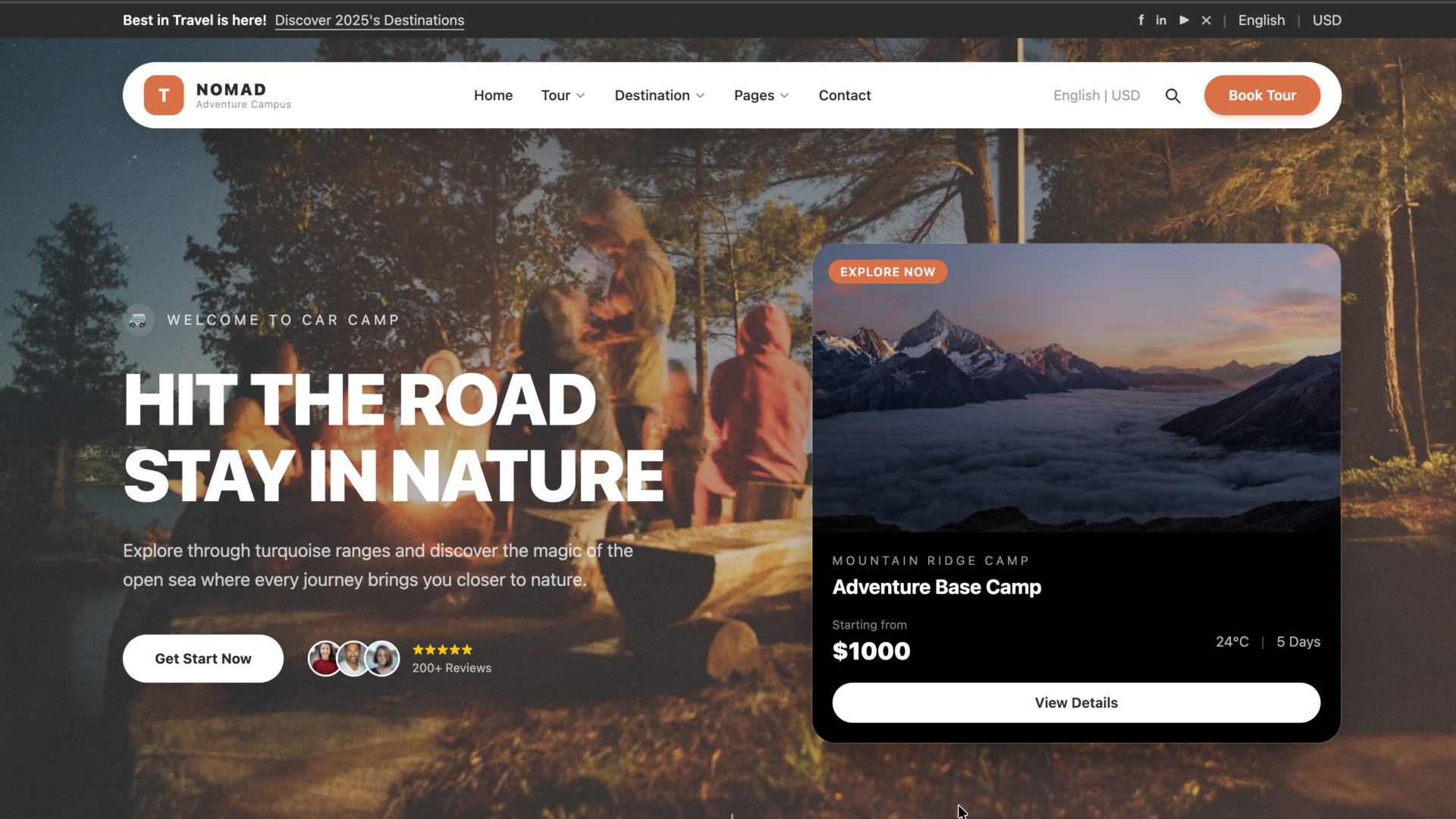
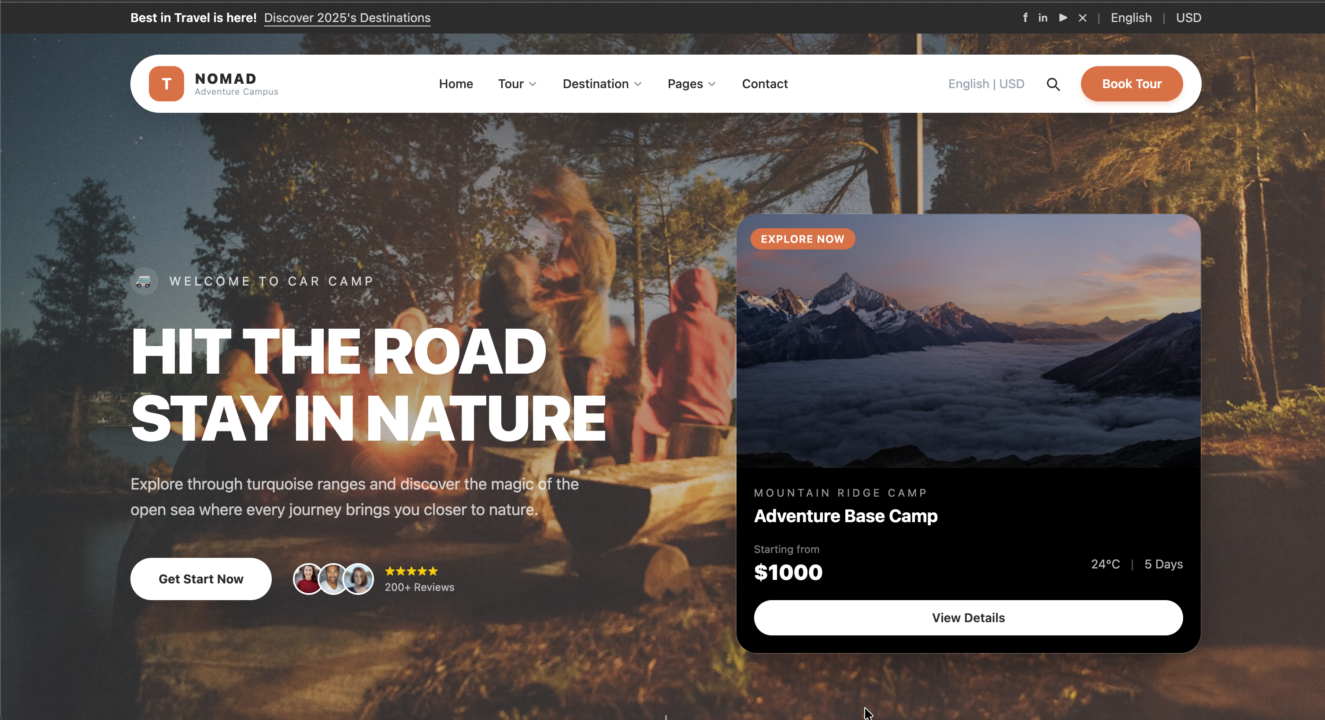
A homepage layout with hero section, key experience highlights, and a clear call-to-action — all structured with proper heading hierarchy and landmark regions for screen reader navigation.
A tours and experiences page with card-based listings that include accessible image alt text patterns and keyboard-navigable filters.
A contact and enquiry form with clearly labelled fields, visible focus states, and error messaging that meets WCAG 2.1 success criteria.
Mobile-first responsive design with text that scales properly and touch targets that meet the minimum size requirements for users with motor impairments.
ARIA landmark roles and skip navigation links — the kind of structural accessibility features only 3.6% of websites currently include.
The theme is well-commented, so if you or your developer want to customise it, you’ll know exactly what each section is doing and why.
Who this is for
If you run a tourism business and you’re building a new website — or you’re overdue to update your current one — this theme is for you. It suits accommodation providers, tour operators, activity businesses, and visitor attraction sites.
You don’t need to be a developer to get value from it. If you’re working with a web designer or agency, hand them the theme and brief them to build on it. The accessibility foundations are already there; they just need to make it yours.
If you are the developer, the Tailwind utility classes and semantic markup will get you moving fast without having to solve the accessibility layer from scratch.
Download it and get started today
The theme is free. No email wall, no upsell funnel — just a download link and documentation.
If you’re not sure where to start with customising it, or you’d like someone to build your full site on top of it, we’re happy to help. Contact page for a no-obligation conversation.
Your next guest might be planning their trip right now. Make sure your website is ready to welcome them.