

You built a website. You paid someone to put it together, or maybe you did it yourself on a weekend. It’s live, it looks reasonable, and you’ve told people about it. So why isn’t the phone ringing?
The honest answer is that having a website and having a website that works are two very different things. After 15 years of building and auditing sites for small businesses across Australia, the same problems keep showing up — quietly costing owners enquiries, sales, and credibility every single day. Here’s what to look for.
First impressions happen in milliseconds
Research consistently shows that visitors form a judgement about your website in under a second. Not a few seconds — under one. In that blink, they’ve already decided whether your business looks credible or not.
That judgement isn’t just about pretty colours. It’s about whether the page loaded quickly, whether it looks current, and whether it feels like the kind of business they’d trust with their money. A site that looks like it was built in 2015 sends a signal, whether you intend it to or not.
The problem is that business owners rarely see their own website with fresh eyes. You know what you meant to say, so you read it that way. Your visitors don’t have that context — and they won’t stick around long enough to figure it out.
Your homepage doesn’t answer the one question every visitor asks
Every single person who lands on your website is silently asking the same thing: “Is this for me?”
If your homepage doesn’t answer that question within the first five seconds, most visitors leave. And they won’t come back.
Common homepage failures include:
- Leading with your company history instead of what you do for the customer
- Using industry jargon that means nothing to a first-time visitor
- Burying the contact details at the bottom of a long page
- Having a beautiful hero image with a vague tagline that tells no one anything
A homepage that converts has one job: make the right person feel immediately understood. It names who you help, what problem you solve, and what they should do next — all above the scroll.
Your site is slow — and slow sites bleed customers
Page speed is not a technical problem. It’s a business problem.
Studies show that 53% of mobile visitors abandon a page that takes longer than three seconds to load. Three seconds. If your site is running on a cheap shared server, hasn’t had its images optimised, or is loaded up with plugins that haven’t been updated in two years, you are handing potential customers to your competitors before they’ve even read a word.
Speed also affects where you rank on Google. It’s a confirmed ranking factor — slower sites appear lower in search results, which means fewer people find you in the first place.
The most common culprits on small business WordPress sites are oversized images, too many poorly-coded plugins, and hosting plans that made sense when the site launched but haven’t been reviewed since. Most of these are fixable without a full rebuild.
You’re invisible on Google
There’s a big gap between having a website and being found on Google. Most small business websites sit comfortably in that gap.
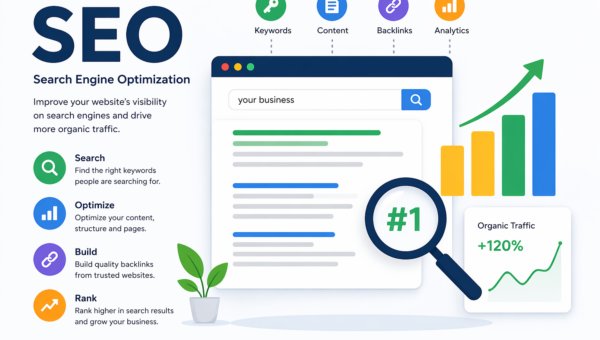
Local SEO — the process of making sure your business appears when someone nearby searches for what you offer — is not complicated, but it does require deliberate effort. The basics that most small business sites are missing include:
- No location-specific content (your suburb or city isn’t mentioned anywhere meaningful on the page)
- No Google Business Profile, or one that hasn’t been updated in years
- Page titles and descriptions that were set up once and never touched again
- No consistent name, address, and phone number across online directories
Your Google Business Profile alone is one of the highest-return things you can invest 30 minutes in. It directly affects whether you appear in the local map pack — the three businesses that show up at the top of location-based searches.
Your site doesn’t work properly on mobile
More than 60% of web traffic now comes from mobile devices. If your site is hard to use on a phone, you’re turning away the majority of your potential customers.
“Mobile responsive” has become a checkbox that a lot of website builders tick without really thinking about the experience. A site can be technically responsive — meaning it resizes itself — while still being genuinely difficult to use on a phone. Small tap targets, text that requires zooming, forms that are fiddly to fill in, pages that load slowly on a 4G connection — these all add up to visitors giving up and going elsewhere.
The test is simple: pull out your phone right now and use your own website as a customer would. Try to find your contact details. Try to fill in an enquiry form. If it’s frustrating for you, it’s frustrating for them.
There’s no clear next step for the visitor
Even if someone makes it through your site and thinks you look great, they still need to be told what to do next. This sounds obvious, but it’s one of the most common things missing from small business websites.
Having five different calls to action — contact us, learn more, follow us on Facebook, subscribe to our newsletter, download our brochure — is the same as having none. When everything is equally important, nothing is.
A service business typically needs one primary call to action: book a call, request a quote, or send an enquiry. That action should be clear, prominent, and repeated at logical points throughout the site — not just hidden in the footer.
Match the ask to where your visitor is in their journey. Someone reading a blog post is not ready to buy yet — a softer CTA works better there. Someone on your services page is much closer to a decision and should be met with a direct prompt to get in touch.
What to do right now
Before you spend money on a redesign or a new round of Google Ads, do this quick self-audit:
- Load your website on your phone and time how long it takes
- Read your homepage headline out loud — does it say who you help and what you do?
- Search for your business on Google — does a Business Profile appear with current information?
- Try to complete your own enquiry form start to finish
- Ask someone who doesn’t know your business to find your phone number in under 10 seconds
If any of those five things gave you pause, there’s work to do. The good news is that most of these issues are not expensive or complicated to fix — they just need someone to look at your site with an objective eye.
If you’d like a second opinion, we offer a free website review for Australian small businesses. We’ll tell you exactly what’s working, what isn’t, and what we’d tackle first. No obligation — just an honest assessment.